
The COSRX vs Cetaphil comparison comes up often when people want to simplify skincare, but it can be misleading if treated like a straight head-to-head. The brands may live in the same bathroom cabinet, yet they come from different traditions and tend to prioritize different things in formulation approach, skin feel, and how their products typically fit into a routine.
That is also why COSRX vs Cetaphil discussions can quickly split: some people want a clear texture experience and flexible layering, while others want a stable base that does not require much thought. The difference is often more about approach than any simple idea that one is “better.”
A quick orientation, without making it complicated:
-
What is being compared in practice: two different ways of building a skincare routine—one more step- and texture-oriented versus one more minimal and base-focused.
-
Why outcomes can differ: how products are meant to be layered, how they feel on the skin, and how sensitive someone is to active levels, a film-like feel, or occlusiveness.
-
Safe assumptions: both are commonly used in sensitivity-adapted routines, but they do not always try to solve the same needs in the same way.
COSRX Vs Cetaphil As Brands: Two Different Logics
In COSRX vs Cetaphil, there is a clear difference in how the brands tend to approach problem-solving. COSRX is often associated with a more ingredient-driven and “buildable” logic, where consistency and layerability are part of how you get results without everything feeling heavy. Cetaphil, in contrast, has a more classic pharmacy presence, with a focus on predictability, simplicity, and working even when skin is in a more reactive state.
This is not about who “wins,” but about what creates the least friction in everyday life. A routine that thrives on multiple thin layers and a clear sense of “something” on the skin can land very differently from a routine where the goal is to avoid thinking, avoid constant adjustments, and still get a stable foundation.
Why COSRX Vs Cetaphil Often Feels Like a Hard Comparison
Comparisons get difficult when three things are mixed together: skin condition, routine complexity, and tolerance. COSRX vs Cetaphil tends to trigger exactly that mix-up. One person can have a dry surface but still get shiny easily, another can tolerate a lot but dislike “tackiness,” and a third can be sensitive—then choices become more about what does not cause trouble.
What often determines the experience is not only what is on the label, but how the product behaves during the day and alongside other steps:
-
Whether it sits as a noticeable film or sinks in more invisibly.
-
Whether it works under sunscreen and makeup without pilling or separating.
-
Whether it handles weather shifts—dry indoor air, cold, or humid summer—without feeling either insufficient or suffocating.
What to Decide Before Reading Too Much Into Other People’s Opinions
UGC and reviews can be useful in COSRX vs Cetaphil, but only if the frame is right. Many people describe “works” or “does not work” when it is really about context: how much was applied, on what base, and whether the skin was stressed, over-exfoliated, or simply temporarily dry.
More accurate questions than looking for a universal winner:
-
Is the goal to build comfort in multiple steps, or to get a stable base layer with minimal adjustment?
-
Is it most important that the skin feel is quick and light, or that it stays put and “holds up” even when the environment is dry?
-
Is there a history of reacting to fragrance, acids, or certain preservative systems—or is it mainly texture and finish that bothers you?
A Note on Why Named Products Often Pull the Comparison in the Wrong Direction
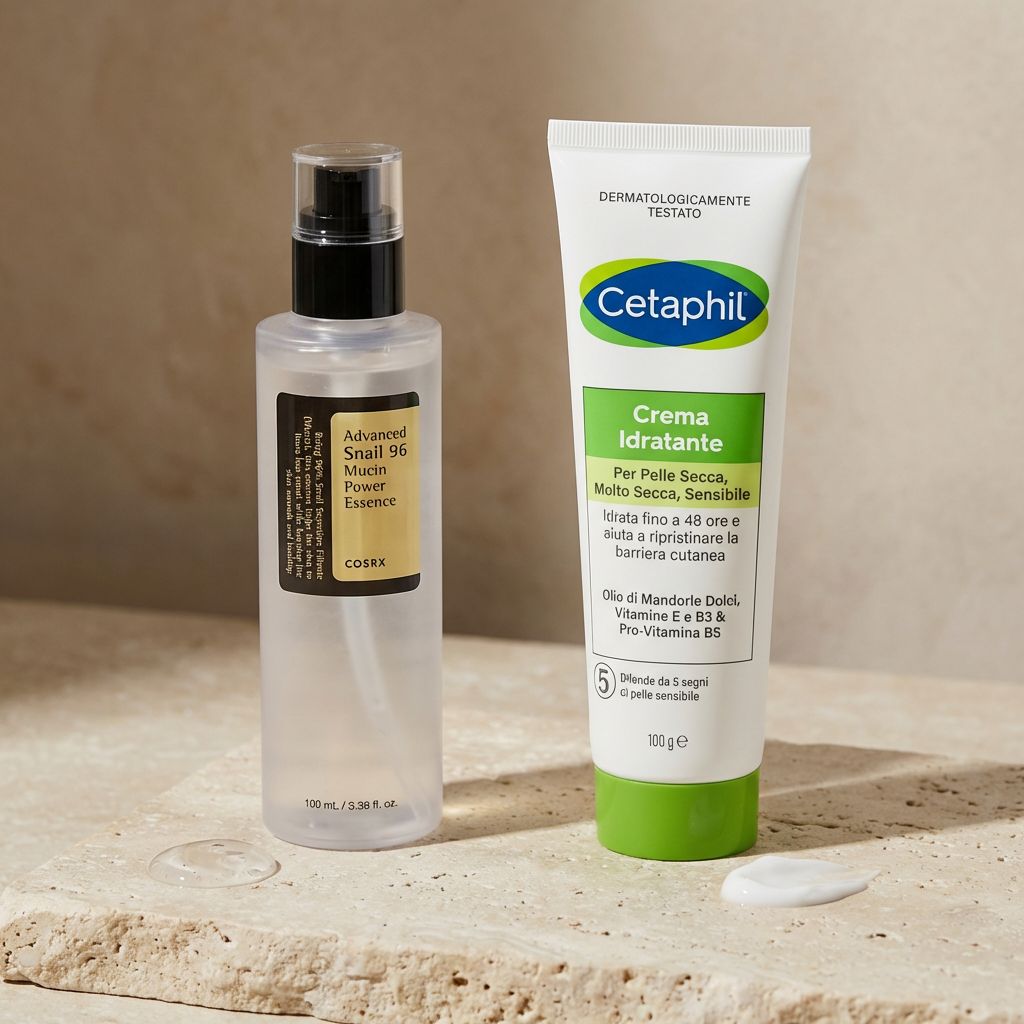
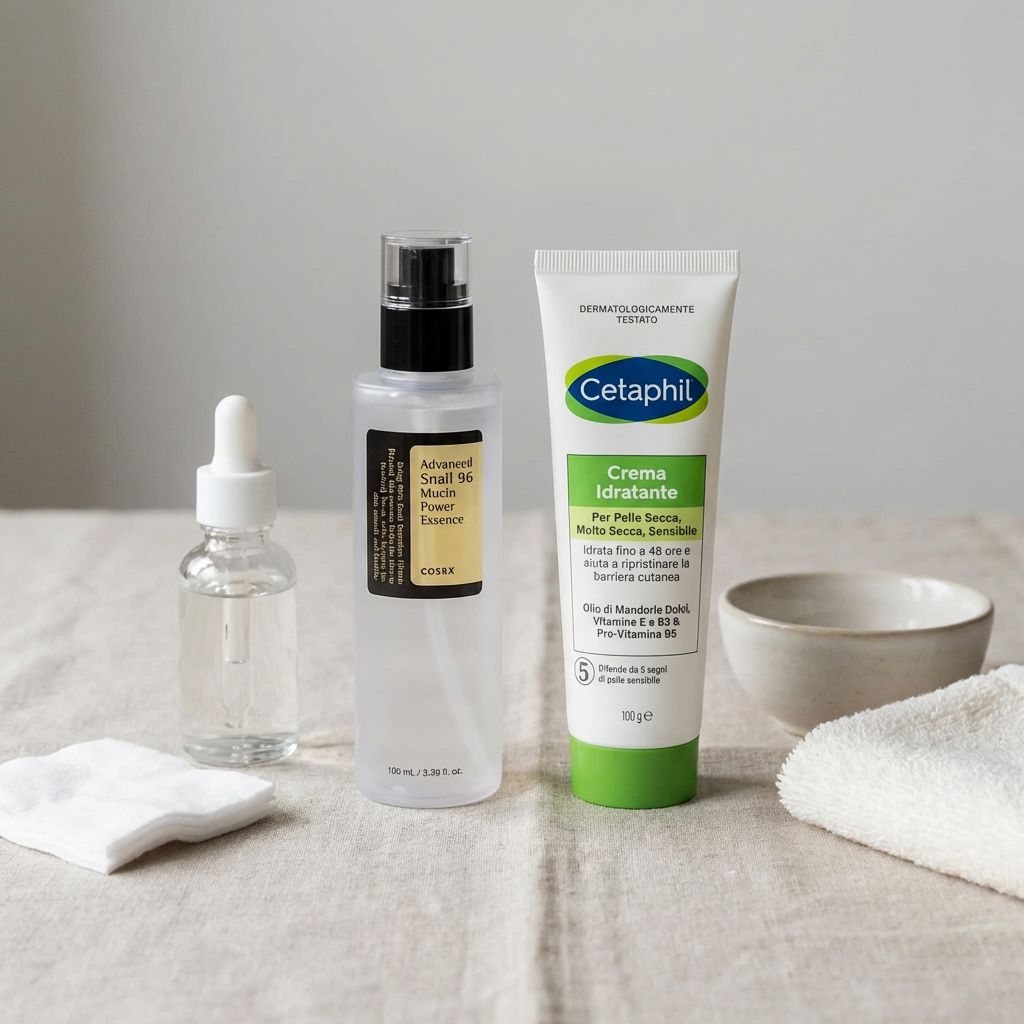
It is common for COSRX vs Cetaphil to turn into a situation where single products represent entire brands, for example COSRX Advanced Snail 96 Mucin Power Essence, but that does not automatically say everything about how the rest of each brand’s range behaves in practice.
For the comparison to be fair, it needs to stay at the right level: what you typically get in formulation thinking, texture profile, and tolerance “personality” from each brand—and which routine scenarios make one approach more practical than the other.
Formulation Logic: Active Repair Focus vs Basic Comfort
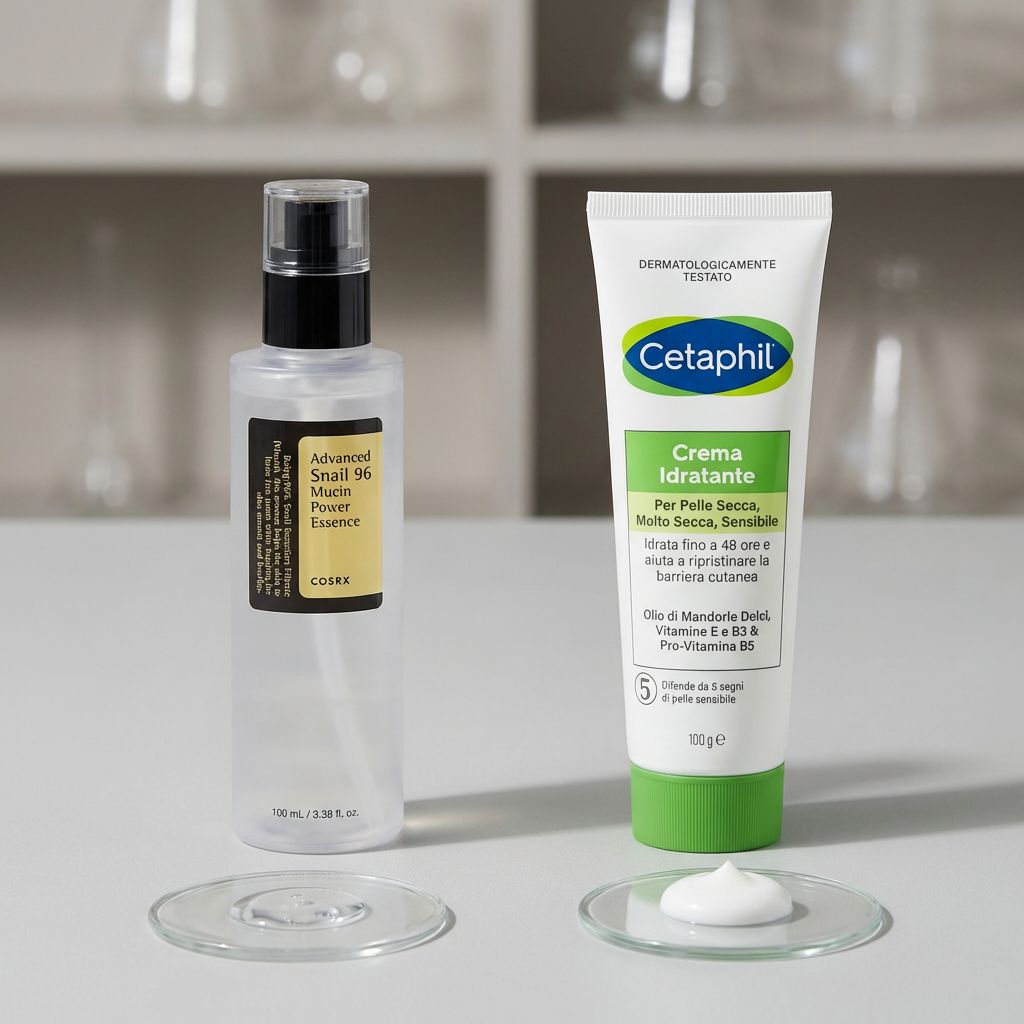
In COSRX vs Cetaphil, the difference is often clear already in the formulation logic. COSRX typically leans toward a more “active” skincare mindset: a clear hero component, a lighter base, and a sense that the product is meant to do something specific on the skin’s surface over time. Cetaphil more often sits in a basic, pharmacy-style lane: robust hydration and emollient support with a focus on being easy to tolerate and simple to use day to day.
This shapes expectations. Someone looking for a noticeable change in skin feel (for example bounce, softness, or a surface that feels more even) often gravitates toward the COSRX side of COSRX vs Cetaphil. Someone who mainly wants to reduce friction in their routine and get predictable, stable comfort often recognizes themselves in Cetaphil’s logic.
Texture and Sensory Feel in COSRX Vs Cetaphil
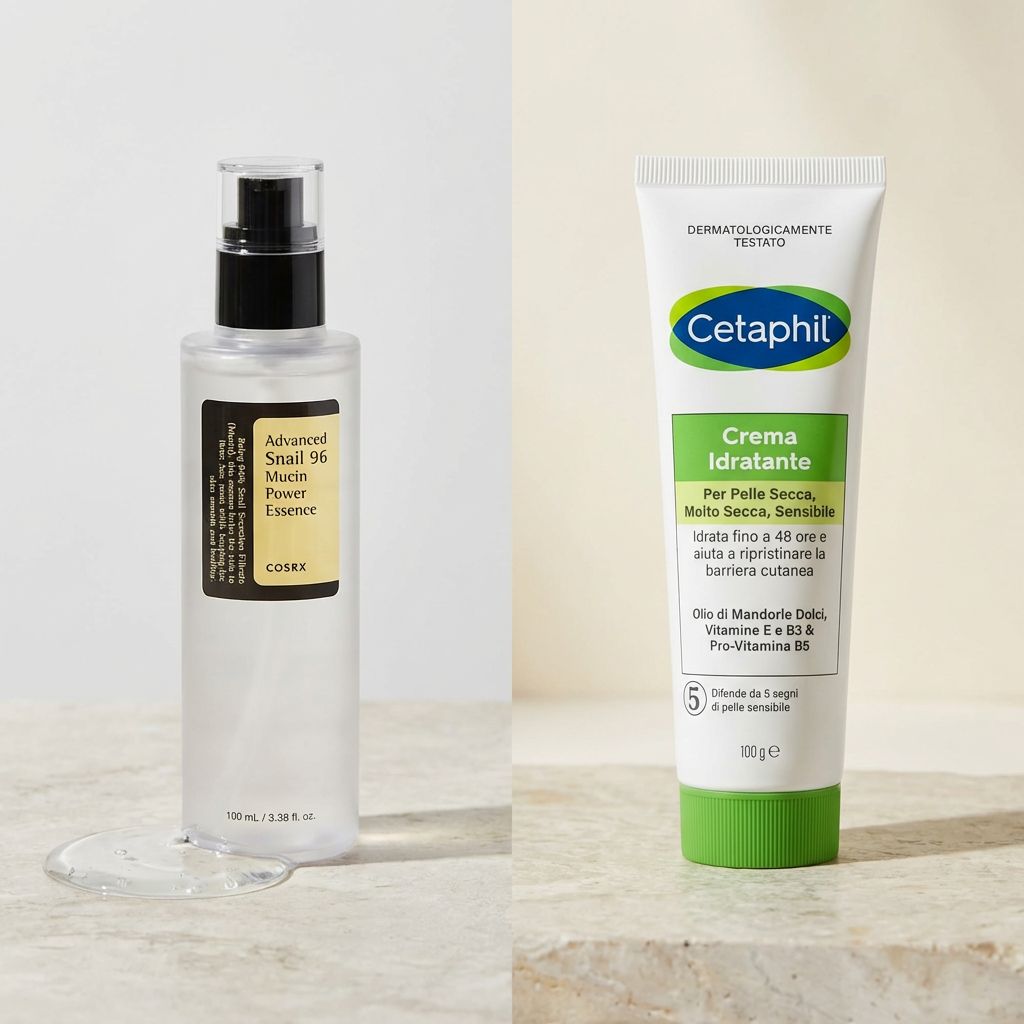
Texture is not a cosmetic “detail”; it controls how much you use, how often, and whether the product actually stays in your routine. In COSRX vs Cetaphil, it often comes down to a lighter, gliding, layer-friendly feel versus a more classic creaminess and a more “sealing” feel.
A lighter, more gel-like or essence-like feel is often experienced as flexible for layering. It can sit smoothly under other steps and rarely feels heavy, but it can also feel insufficient if skin is very dry or if the climate is cold and dry. A richer, creamier texture can give immediate comfort and reduce tightness quickly, but it can be too much for someone who dislikes a film on the skin or gets shiny easily.
- In warm, humid conditions, or if skin gets glossy easily, a lighter feel is often easier to use consistently.
- In cold weather, strong wind, or when skin feels “thin,” a more enveloping cream feel can be more noticeably comfortable day to day.
- If the routine needs to work both morning and night, texture can decide whether the same product feels reasonable in both situations.
Tolerance Profile: When “Gentle” Means Different Things
In COSRX vs Cetaphil, words like “mild” and “gentle” are used a lot, but they can mean different things. Gentleness can mean a low risk of stinging, but also how a formula behaves on skin that is temporarily reactive, dehydrated, or stressed. A minimalist, barrier-oriented base can feel reassuring when everything else irritates. At the same time, a more “active-leaning” formula can feel mild in normal conditions but require more finesse during periods when skin is extra sensitive.
What is rarely said out loud in COSRX vs Cetaphil discussions is that tolerance is not only about ingredients, but also about dosing and friction. A product that feels light can lead to multiple layers, and then the experience changes. A product that feels rich can lead to over-application, which can create a heavier feel than intended. Small habits create big differences.
Routine Compatibility: Layers, Timing, and Expected Role
A practical dimension in COSRX vs Cetaphil is what role the product is meant to play. Is it supposed to be a “middle layer” that adds hydration and support, or should it provide most of the softening and protective feel? The COSRX approach often fits when the routine already contains several steps and you want each step to contribute without competing in heaviness. The Cetaphil approach often fits when the routine needs to be compressed and one step should do much of the work.
This is also where a common pitfall appears: comparing them as if they are interchangeable. In COSRX vs Cetaphil, the outcome becomes more understandable when the comparison is about “which role is needed” rather than “which is best.”
Where the Differences Show Up Most in Practice
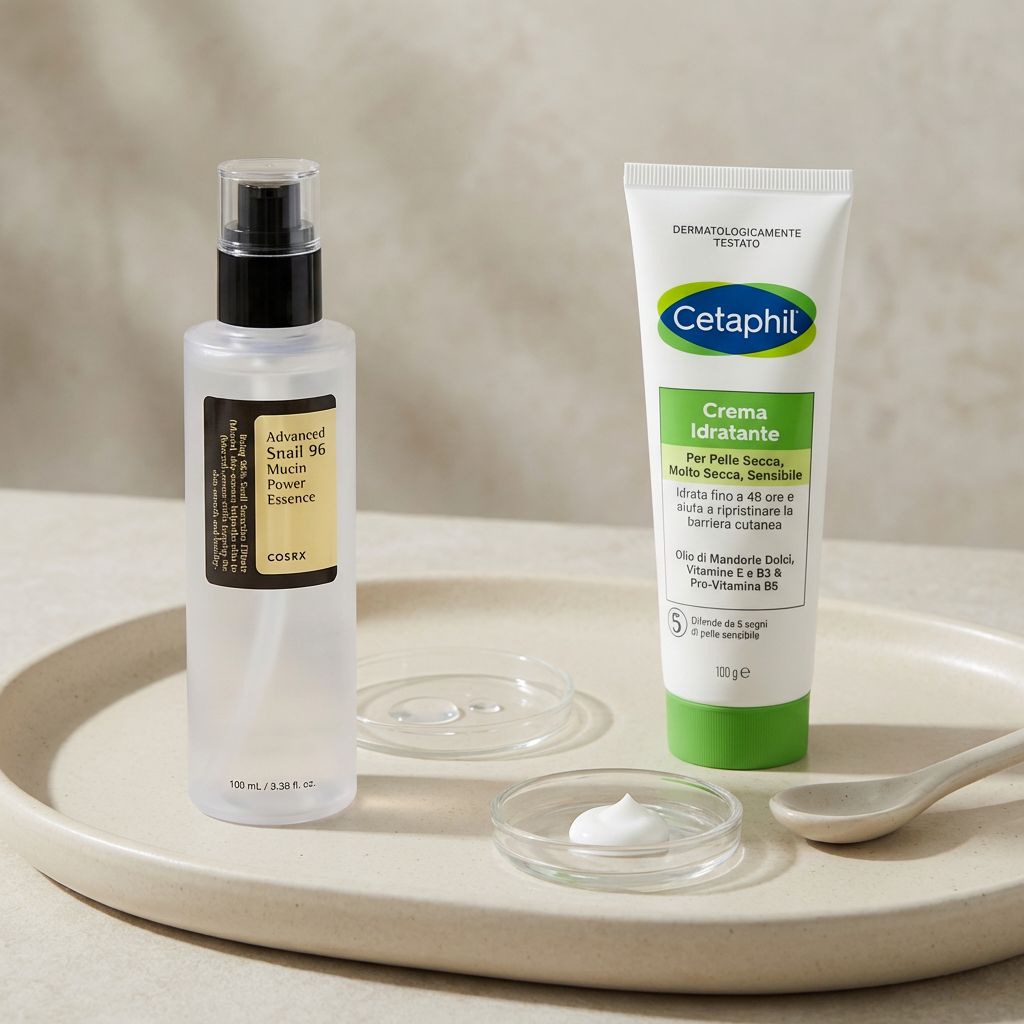
It is in everyday details that COSRX vs Cetaphil becomes clear. How skin feels two hours after application. Whether the product plays well with sunscreen. Whether it works when skin swings between normal and dry. These differences are often more important than individual claims.
Some situations where the contrast tends to be obvious:
- If skin feels dehydrated but also gets shiny easily, a lighter, more layerable feel can be easier to keep consistent.
- If skin often feels tight right after cleansing, a creamier, more emollient feel can give faster comfort without requiring multiple layers.
- If the routine contains several active steps, a more base-oriented moisturizer can sometimes feel “stabilizing,” while a more function-driven formula can feel like an extra layer that needs balancing.
Overall, COSRX vs Cetaphil is less about competing on the exact same playing field and more about solving different everyday problems: flexibility and layerability, or predictable comfort with simpler routine logic.
COSRX vs Cetaphil: When the Choice Feels Easy and When It Does Not
In a COSRX vs Cetaphil comparison, a lot comes down to what should be the “engine” of the skincare approach: a more active, texture- and function-driven step that can be built into many routines, or a more basic, predictable step that mainly aims to keep skin calm and stable. That is why the choice can feel obvious for some and frustrating for others: the two approaches can pass each other without truly competing for the exact same role.
This becomes clear when you look at everyday logic. In periods of changing skin feel, when layering works differently from day to day, one option tends to suit the person who wants to adjust feel and finish more precisely. The other option more often suits the person who wants to minimize decisions and get a more constant experience whether skin is doing great or slightly out of balance.
Practical Decision Keys in COSRX vs Cetaphil: Texture, Layering, and Tolerance
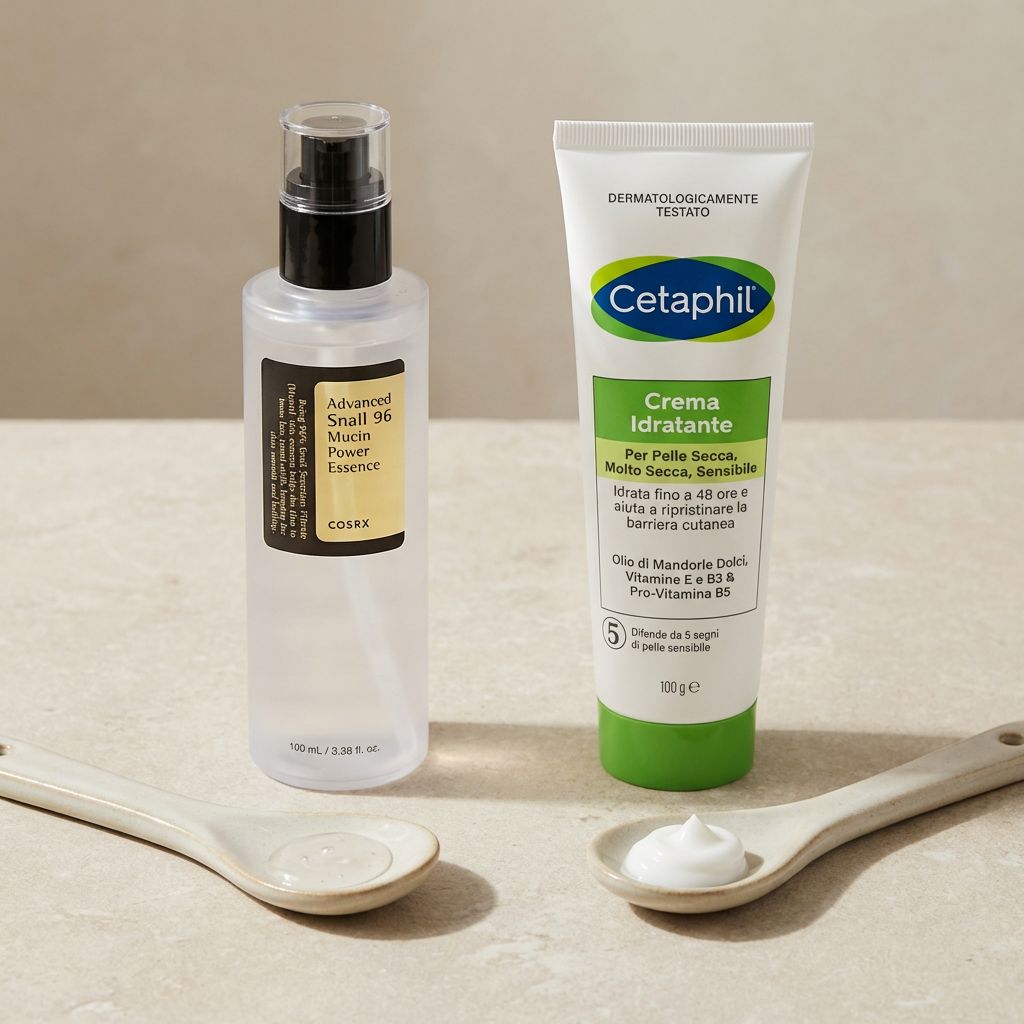
If COSRX vs Cetaphil is going to be boiled down into something usable, these are the differences that most often decide how the choice feels in practice:
- Texture preference: someone who wants a clear, “treatment-like” feel and enjoys working with multiple thin layers often leans toward the more function-driven approach; someone who wants a more immediate, soft, protective feel without analyzing each step often does better with a more basic option.
- How the routine is built: if the routine already has several steps, a flexible middle layer can be easier to place without weighing things down; if the routine should be short and stable, a more consistent finishing step is often easier to live with.
- Tolerance profile: if skin reacts to too many changes, predictability can be an advantage; if skin mainly reacts to dryness or external stress, a more adjustable approach can feel more useful, but it also requires accepting that the experience can vary with amount and combinations.
What is often missed in COSRX vs Cetaphil discussions is that “tolerance” is not only about what skin can handle chemically, but also what works behaviorally. If a formula requires more fine-tuning to be good in everyday life, it can be perfect on paper but less sustainable in practice.
COSRX vs Cetaphil in a Mixed Everyday Routine: When It Can Clash
There are a few typical situations where the differences become clearer and where it is easy to feel disappointed if expectations are miscalibrated. Not as a fault in itself, but as a mismatch between needs and approach.
- If skincare needs to be fast and thought-free, a more “buildable” option can feel unnecessarily fiddly, especially if you dislike tackiness or want an immediate matte or neutral surface.
- If you want to vary finish and layering by season, a more constant option can feel too inflexible, even if it is comfortable and stable.
- If you often change other steps in the routine, the risk increases that you attribute a reaction to the wrong step; then it becomes extra important to keep the rest stable regardless of which side of COSRX vs Cetaphil you lean toward.
If you want to read up calmly and make a steadier choice, it can be reasonable to start from a clear role: an option as a “moldable part” of the routine or an option as a “foundation.” That reduces the risk of chasing an experience that is really about how the routine is built, not the name on the packaging.
A Neutral Path to a Decision in COSRX vs Cetaphil
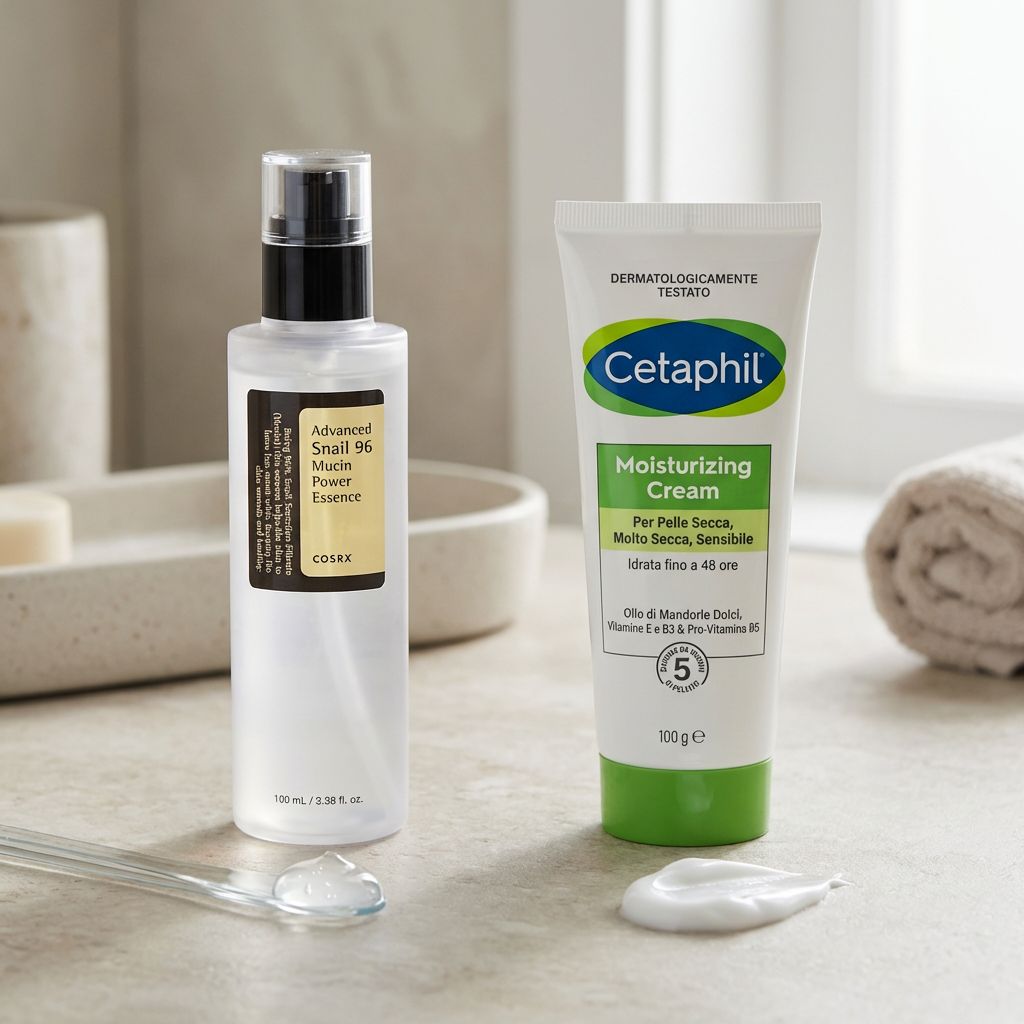
The choice in COSRX vs Cetaphil becomes most robust when it is based on what most often limits your skin: the need for flexibility and layerability, or the need for stability and minimal variation. One tends to fit better in routines where several steps should work together without feeling heavy; the other tends to fit better in routines where you want one step to “just work” and not take up mental space.
As a simple orientation: someone looking for a more adjustable step often ends up closer to COSRX Snail 96, while someone prioritizing a more consistent, basic option often looks at the Cetaphil cream. None of this declares a winner; it only points to which everyday logic is likely to be easiest to maintain over time.
Common Questions About COSRX vs Cetaphil
What Do People Actually Mean by COSRX vs Cetaphil When They Compare?
Often it is not “better or worse” that is being compared, but two different ways of building a routine: a more function-driven setup versus a more basic one. Confusion happens when you assume they must have the same role.
Why Does the Comparison Vary So Much Depending on Who Answers?
Because preferences around texture, layering, and how much you want to adjust a routine vary a lot. Two people can have similar skin feel but different tolerance for day-to-day variation, and then the conclusion changes.
How Do You Avoid Drawing Big Conclusions From a Single Week?
By keeping the rest of the routine stable and changing only one factor at a time. Short-term swings can be about climate, stress, or overuse of other steps, not necessarily the comparison you are trying to make.
When Is It More Reasonable to Prioritize Stability Over Flexibility?
When skin often feels unpredictable, or when you want to minimize decisions to maintain continuity. Then a steady, consistent approach is often easier to keep up without “chasing” the perfect combination.